Step one
Test welds first, then production
Welder settings are checked with test welds and adjusted for conditions and the membrane. A successful earlier test does not remove the need to recheck when conditions change.
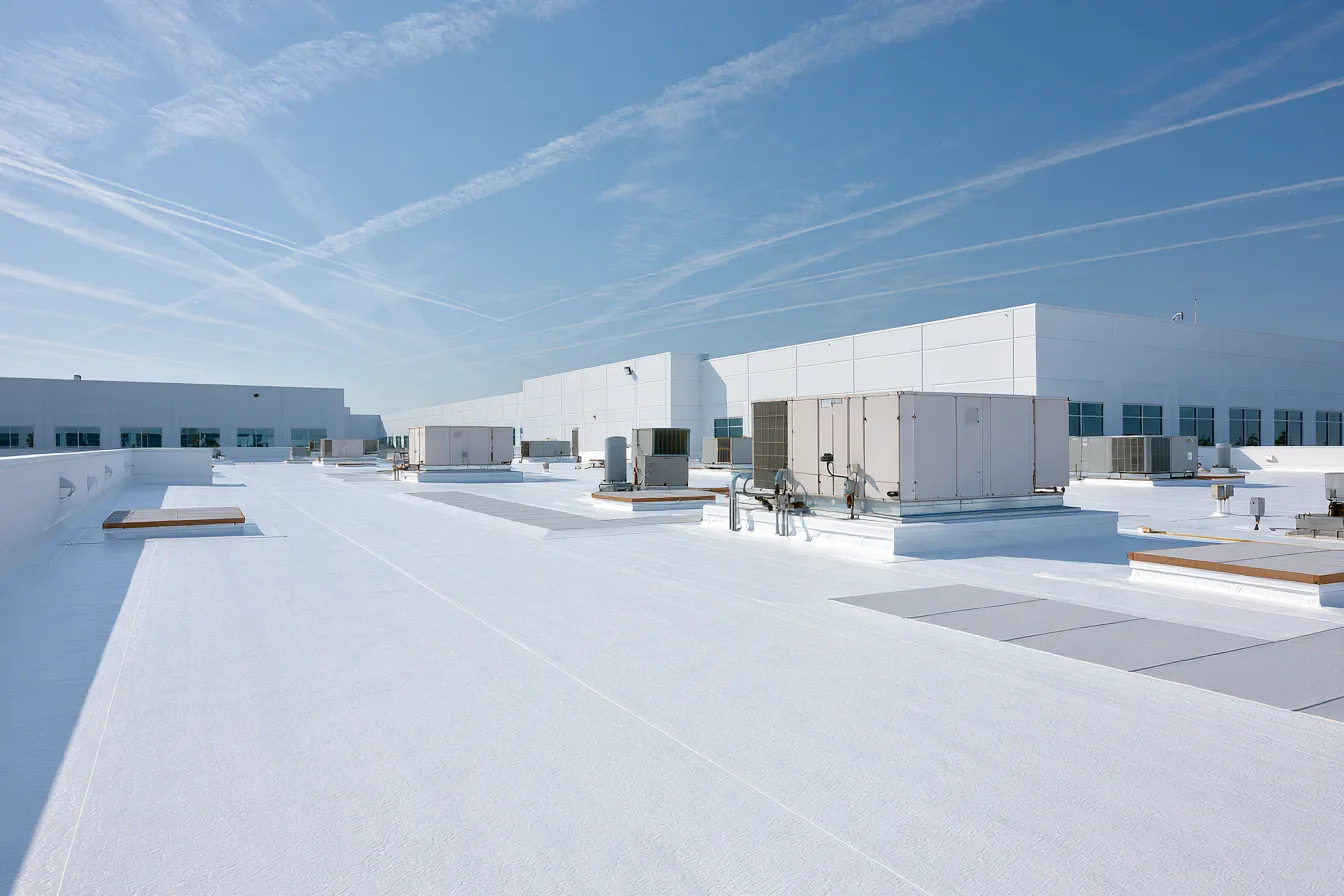
Norman, OK
A TPO roof depends on sound attachment, welded seams and the details around equipment and drains. Our roofers plan the assembly around the existing deck and the building’s use.
How TPO works
TPO is a thermoplastic membrane supplied in sheets whose overlaps are joined with hot-air welding. The weld needs to be made and checked under the conditions present during installation.
A roof that looks continuous from the ground still has attachment points, curbs, drains and terminations to get right. Those details belong in the specification alongside the membrane thickness and insulation.
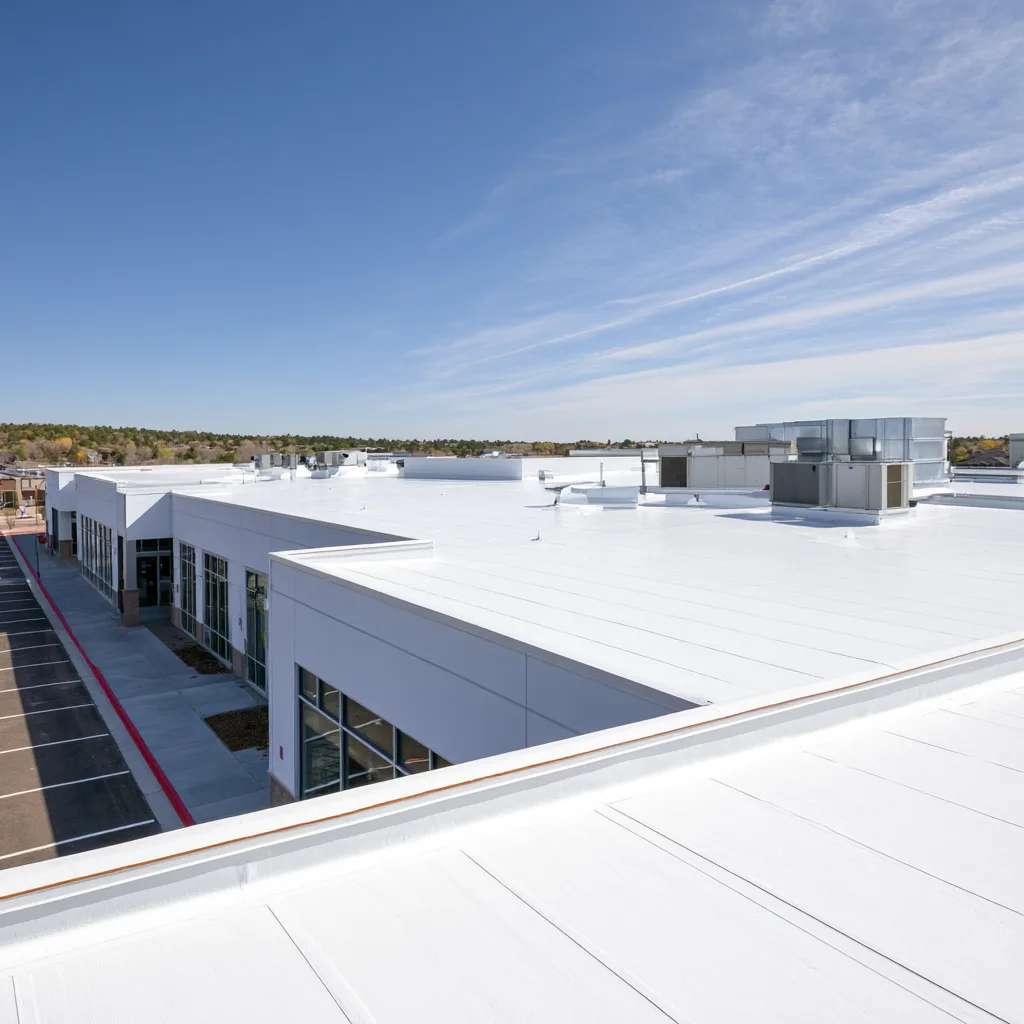
A TPO roof is an assembly, and it goes down in one direction only. Each layer depends on the one under it being right, which is why a bid that starts at the membrane has skipped the parts that decide whether the membrane stays put. Take the order below as the order the work happens in.
Everything above starts here. Steel, concrete or wood, the deck has to be sound and dry enough to hold fasteners at the values the system was designed around. Soft spots, rusted flutes and previous saturated layers get found now, because finding them later means opening a finished roof back up.
Some buildings push a lot of moisture up into the assembly. Cold storage, laundries, kitchens and pools are the usual ones. Whether a vapor retarder belongs in the build-up is a question about what the building does for a living, and the roofer answers it before insulation goes down and not after.
Rigid board carries the roof's thermal performance and, on a tapered layout, its slope. Boards get laid in staggered, offset layers so joints do not line up into a continuous path, and tapered packages are built to move water toward the drains rather than into the low corner the old roof created.
A compatible cover board can provide a firm substrate and additional protection beneath the membrane when included in the specified assembly. Its role and product should be clear in the proposal.
Only now does the TPO go down, mechanically fastened, fully adhered or induction welded depending on wind design, deck type and what the building can tolerate during the work. Laps are hot-air welded into a continuous surface, and the attachment method is a design decision with consequences and not a preference.
Perimeter, curb, pipe and drain details must match the membrane system. Drainage and overflow requirements need to be addressed for the building, along with the covering.
Checking the welds
Test welds and seam probing help verify the seam as work proceeds. Carlisle’s guidance describes those checks for its thermoplastic systems. The selected manufacturer’s instructions govern the project.
Step one
Welder settings are checked with test welds and adjusted for conditions and the membrane. A successful earlier test does not remove the need to recheck when conditions change.
Step two
Seam probing helps find unbonded spots or other interruptions that are hard to judge visually. Defects need correction and rechecking before the work is closed out.
Step three
Electronic leak detection or other independent checks may be part of a project specification. Discuss their suitability, scope and responsibility rather than assuming they accompany every roof.
Step four
Confirm the inspection and documentation requirements of any manufacturer warranty offered. The issuing party’s terms determine what must be completed before coverage is provided.
Thermoplastic polyolefin is a single-ply sheet whose laps are joined with heat instead of adhesive. The practical contrast is with EPDM, a rubber membrane usually seamed with tape or adhesive, and with PVC, another heat-welded thermoplastic with different chemical resistance. Roofing TPO is normally specified in a light reflective color, where EPDM is commonly black. Which one suits a given building depends on rooftop equipment, what the building exhausts, and the wind and attachment design, and that call belongs to the roofer scoping it.
Service life depends on the system, installation, exposure, traffic and upkeep. A warranty term is a contractual coverage period, not a promise that the roof will last exactly that long. Ask about the intended service plan and maintenance alongside the proposal.
Yes. Hail can damage the membrane or underlying layers, depending on the assembly and impact. A roof need not leak immediately for a close inspection to be useful. The actual condition determines the repair question.
Punctures cluster along the paths people walk, which on most commercial buildings means the route from the hatch or ladder to the HVAC units. Dropped fasteners, tool bags and service carts do the damage, and not the walking itself. Walkway pads along those routes and around equipment are the standard answer, and they are cheap next to opening a wet insulation field later. Traffic pads belong in the bid on any roof that gets serviced regularly.
Check the company’s current commercial roofing endorsement and insurance. For a manufacturer warranty program, confirm any installer qualification and system requirements separately. The commercial roofing hub explains the project questions to settle alongside those checks.

Norman Peak Roofing
Tell us what the building is used for and whether the roof needs repair or a replacement plan. Our roofers review the existing assembly, access and equipment details with you.
(405) 253-0996