Step one
The ground line, before any ladder
Dents and other marks on gutters, vents and nearby surfaces can provide context. They do not establish damage to the shingles or a specific loss date by themselves.
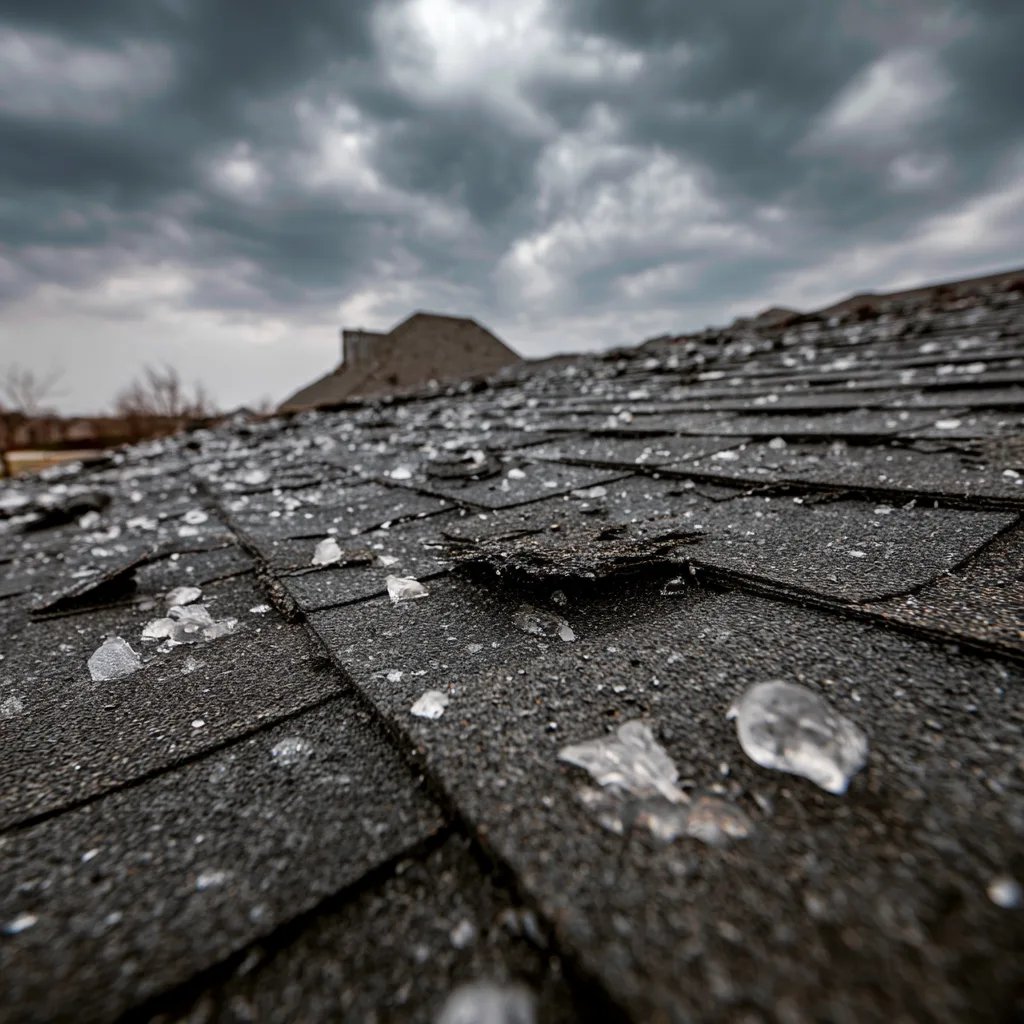
Norman, OK
Hail can damage shingles, flashing and roof accessories without causing an immediate leak. Our roofers assess the affected roof and explain whether repair or replacement is warranted.
Where the work starts
After a loud hailstorm, the practical question is whether the roof needs work. Damage on one surface does not answer that for every component.
Our roofers assess the covering, roof details and visible impact evidence. The extent of damage, the condition of surrounding shingles and the feasibility of a sound repair all shape the recommendation.
If you are uncertain whether the issue is storm damage or ordinary deterioration, a roof inspection can help establish what needs attention.
How the visit runs
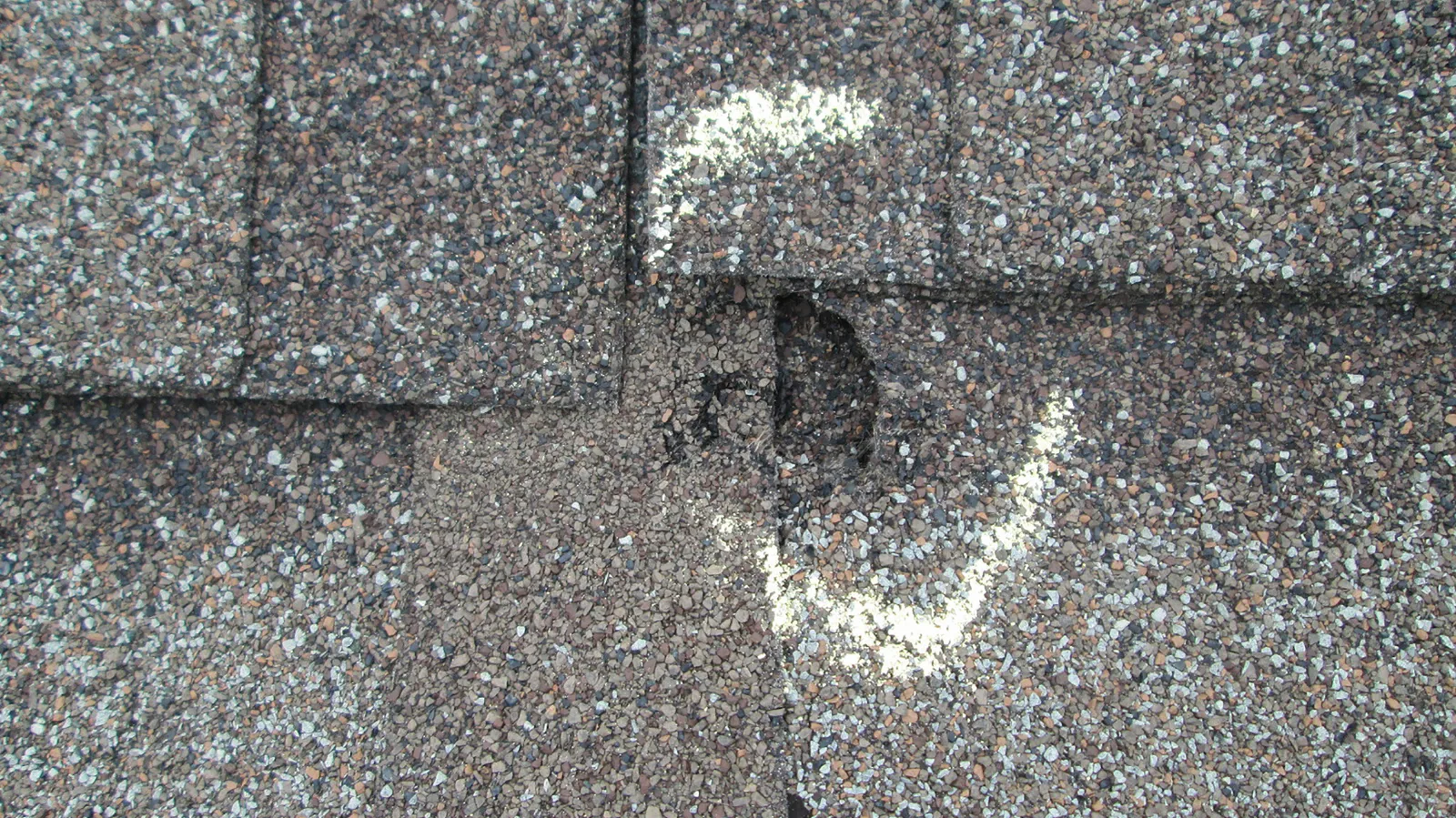
Test areas and photographs can help document hail damage, but a strike count alone does not determine the repair or an insurance outcome. The inspection also needs to consider the roof’s materials, details and repairability.
Step one
Dents and other marks on gutters, vents and nearby surfaces can provide context. They do not establish damage to the shingles or a specific loss date by themselves.
Step two
The roofer checks accessible slopes, ridge caps, flashing and penetrations. Representative test areas may help document the pattern where appropriate.
Step three
Photographs and notes can distinguish the affected components and locations. Tell the roofer when you first noticed the damage and whether prior repair or inspection records exist.
Step four
The proposal should identify the damaged materials, how the repair will connect to the remaining roof, and any unresolved concealed conditions. Confirm the documentation and warranty terms included.
Damage may involve the covering, accessories or both. Our storm guide explains the signs and provides the nearby NOAA event record.
Impact can dislodge granules or damage the shingle itself. A close inspection helps distinguish that from wear or other causes.
Impact marks provide context but do not prove every roofing component needs replacement.
Assess whether the component still performs correctly and whether replacement is needed.
The condition and installation of the cap course determine the appropriate repair.
A leak may become visible after the storm. Record when it appeared, but do not assign its cause or date solely from the stain.
If water's coming in right now, keep everything at ground level. Move what's under the drip, put a bin down, photograph the stain, and stay off the roof. Tarping is roof work, and a tarp that isn't anchored into sound decking becomes the next leak.
What moves the number
A spot repair can work where damage is limited and the surrounding covering can be handled and tied back in soundly. More extensive damage or an unrepairable covering may call for a larger scope.
A brittle shingle can break during repair, but age alone does not decide the answer. Product availability, layout, condition and installation details also matter. Ask the roofer to explain why the recommended scope is workable.
For replacement budget context, use the roof cost calculator before comparing measured proposals. Scheduling depends on the actual scope and conditions.
Get the hail damage pricedHow much comes apart: reaching a fractured mat means lifting the sound courses above it, and that work gets priced whether the shingles above were struck or not.
What the decking looks like: soft or split boards under the strike zone turn a shingle job into a decking job, and that is only knowable once the covering is off.
How cut up the roof is: valleys, penetrations, a steep pitch and the staging it needs all cost more than the same square footage on an open, walkable plane.
The NOAA archive near Norman shows reported hail and wind locations, dates and magnitudes. It is useful background when you are gathering records; it is not a property inspection.
Reported hail nearby does not prove that this roof was damaged.
Prior photographs, invoices and inspection findings can help explain changes in condition.
An inspection date is not automatically the loss date. Give the insurer accurate information and avoid guessing.
Outcomes turn on policy language, on the age and condition of the covering, and on how well the damage was documented. What follows is how those pieces generally work. None of it is a prediction about your claim, because nobody outside your carrier is in a position to make one.
Some policies contain exclusions for cosmetic damage to specified components. The wording determines what the exclusion covers and how appearance-only damage is treated. Ask your insurer to identify the applicable endorsement and explain it for the damaged component.
A discontinued product or color can make a partial repair harder to match. The roofer can document availability and repair concerns; coverage depends on the policy and applicable requirements. Ask the insurer to explain its position in writing.
It changes two different things. On the policy side, some policies settle an older covering on a depreciated basis rather than a replacement basis, which is a money question the wording decides and the damage doesn't. On the work side, a brittle covering often can't be spot repaired at all, because the shingles around the repair break when they're lifted. The second one is the roofer's to tell you; the first one is your carrier's.
Keep the date of the storm you observed, when damage or a leak was first noticed, and when photographs and inspections occurred. These are different facts. The storm archive can add context, but it cannot assign the loss date for your property.
The insurer decides coverage under the policy. A roofer can inspect, document roofing conditions, prepare a repair estimate and answer questions about the proposed work. Nobody should promise claim approval in return for your signature.
Ask what workmanship and product coverage is offered for the repair, including exclusions and required maintenance. Terms differ, and some enhanced products or systems have additional coverage. The roof warranty guide explains the documents to compare.
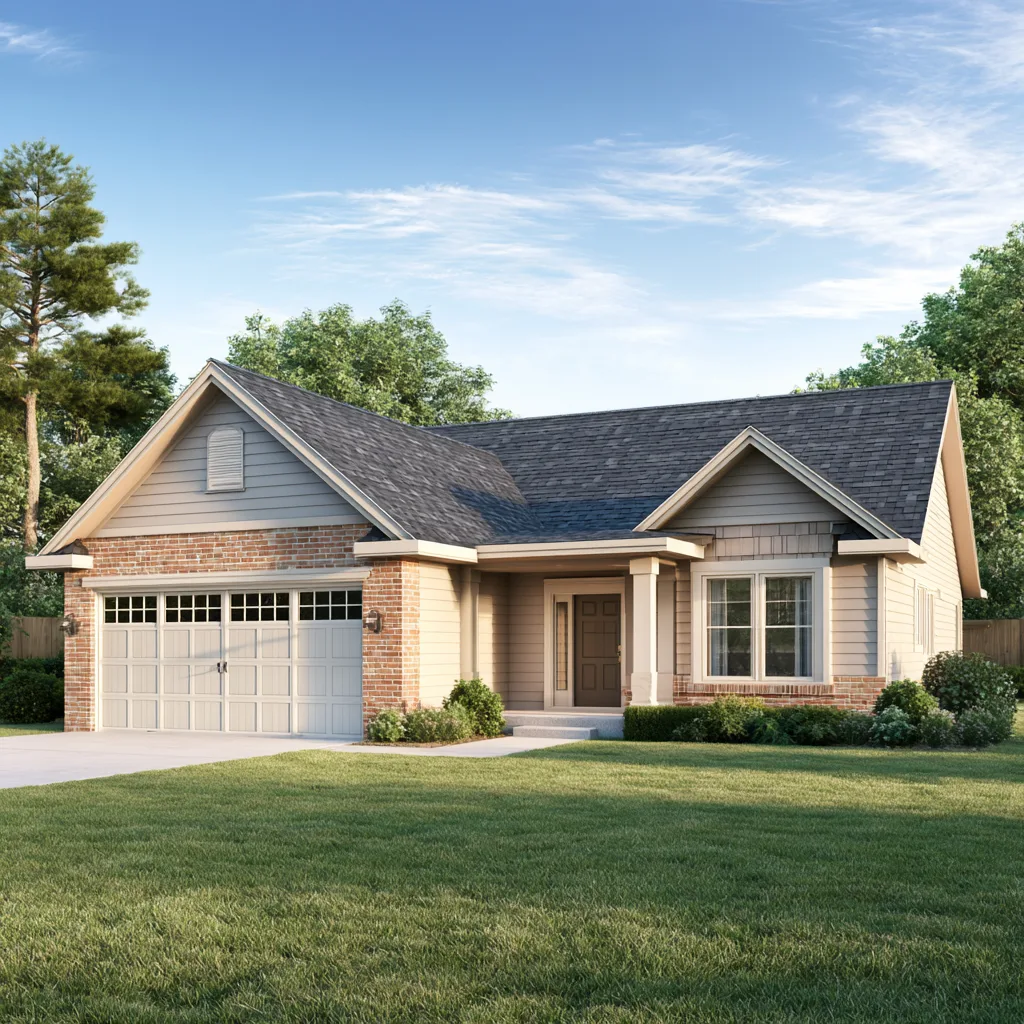
Norman Peak Roofing
Tell us when the storm occurred and what you have noticed. Our roofers offer a free inspection, explain the roofing findings and discuss any repair that is needed. Ask about written reports or other documentation when booking.
(405) 253-0996