Roof Repair
Repairs kept to the section that failed, so sound decking and shingles stay where they are.
Explore this service
Norman, OK
Chautauqua’s early twentieth-century houses carry roof details worth keeping: a chimney, a porch roof, the lines that give the house its shape. Our roofers look at what needs repair and what can stay, then plan the work around the house you have.
The age of the stock
A house built between 1915 and 1935 may have seen several roof projects since then. The current shingles and the decking beneath them have their own condition. A free roof inspection gives you a place to start when that history is unclear.
For a leak around a chimney or porch junction, repairing the detail can preserve the sound roof beside it. If the covering is worn across a larger area, our roofers explain the replacement scope and how the existing details will be handled.
Chautauqua was designated a Norman historic district in 1995. Its roughly 153 residential structures lie between Symmes and Brooks streets, with Chautauqua Avenue and Lahoma Avenue along the other sides. Most date from 1915 to 1935.
That history makes the roof’s profile and details part of the material decision. Replacing a covering with identical material and changing its appearance are different questions under the City’s review process.
Chautauqua
District history and boundaries: City of Norman Historic District Commission.
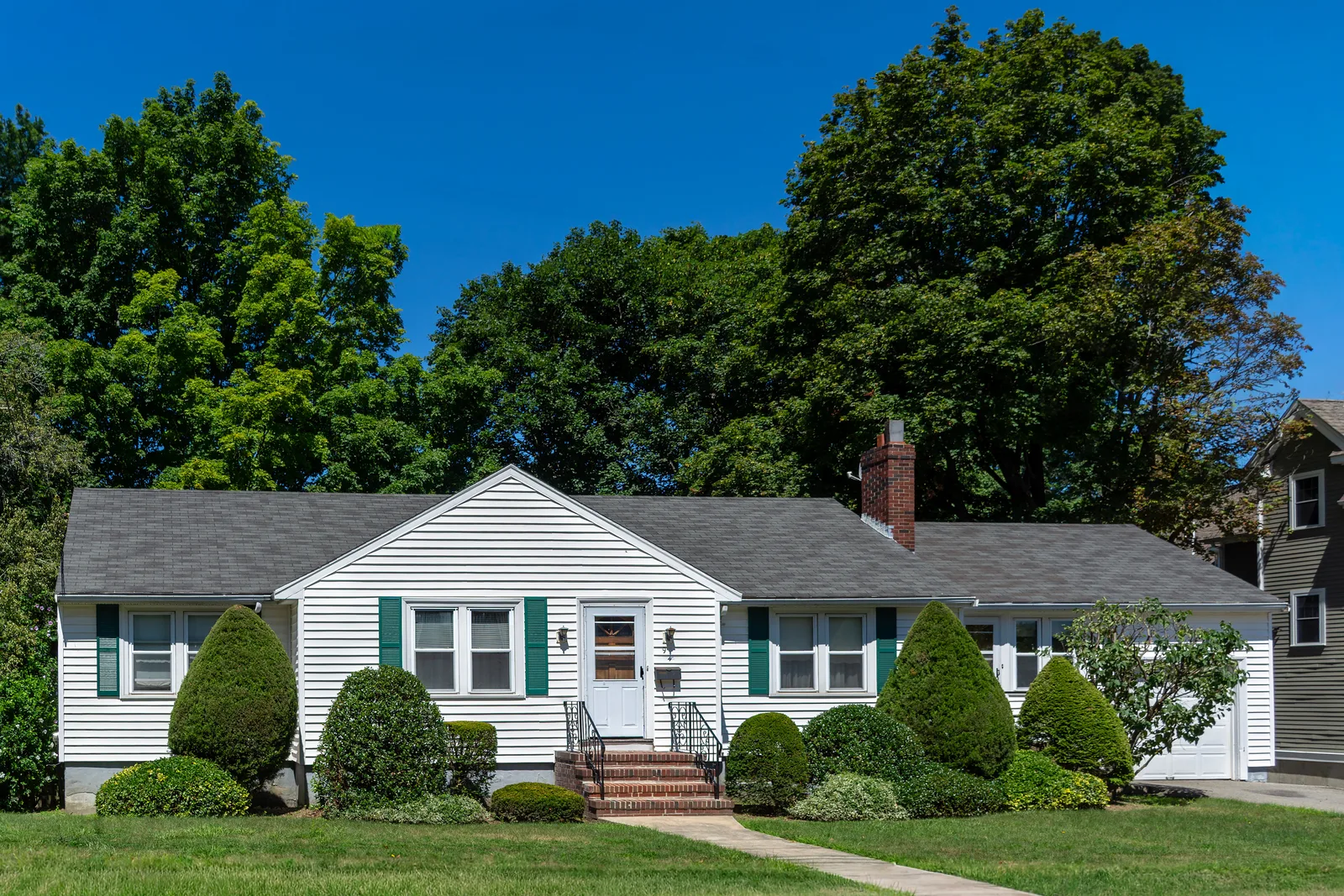
Shingles can hide a loose board, a past patch or an old flashing joint. The estimate should explain how those discoveries will be handled before tear-off starts.
Houses from this era were often decked with individual boards laid with gaps between them, instead of the sheet plywood a newer house has. Boards can be perfectly sound at a hundred years old. They can also be split around old nail holes, or spaced too wide for the fasteners a modern shingle needs, and the roofer doesn't know which until the covering is off.
A roof that's been recovered a few times carries more weight, and more hidden history, than a single layer does. Stripping two or three layers means more labor, more disposal, and a better chance of finding something soft. It's a fair thing to ask before the work is agreed: how many layers does the roofer expect, and what changes if there's one more than that?
If your roof has steep sections or a porch below the work area, the staging changes. The roofer plans access and protection around those features instead of carrying over a price from a simpler roof.
Where a chimney meets the roof, the flashing has to shed water through several adjoining parts. Repairing that transition correctly can be useful without replacing sound shingles across the whole house. See what chimney flashing repair involves.
Put together, that's the case for an itemized estimate on an older house. Tear-off and layer count, decking replacement as its own line, flashing, and ventilation each get their own entry, so a hundred-year-old roof isn't priced as one flat per-square number. Anyone quoting a full roof replacement here should be willing to say what happens to the total if the deck comes up worse than expected, and to say it before the first bundle is ordered.
Where it sits
The City exempts ordinary maintenance, including re-roofing with identical materials, from a Certificate of Appropriateness. A change to the exterior appearance can require review. Discuss the actual product and proposed changes with the City’s Historic Preservation Officer before materials are ordered.
The roof still needs to meet the applicable construction rules. The Norman permit guide explains the difference between ordinary roofing work and a project that changes more of the building.
Start with the work you need. Repair, replacement and related details are planned around the existing house.
Repairs kept to the section that failed, so sound decking and shingles stay where they are.
Explore this serviceTear-off, deck checks and a new covering built around the house.
Explore this serviceA free inspection to explain the roof’s condition and your options.
Explore this serviceWater runs along rafters before it drops, so the opening is usually uphill of the stain on the ceiling.
Explore this serviceGutters pitched to drain, with downspouts carrying water past the foundation instead of dumping it at the wall.
Explore this serviceThe metal transitions that carry water past masonry and onto the roof.
Explore this serviceNot every roof job does. The City lists re-roofing with identical materials as ordinary maintenance exempt from a Certificate of Appropriateness. Exterior appearance changes can require review, so the proposed material and scope should be checked with the Historic Preservation Officer before work begins.
It depends on whether the work needs review and how it will be handled. Ask the City about the actual proposal before setting a material order or start date. If rain is entering the house, tell the roofer so temporary protection can be discussed while the longer-term work is planned.
Not necessarily a different product, but the choice carries more weight in a designated district, because exterior alterations are exactly what the Commission reviews. Color and profile are part of that conversation and it's better to have it before anything is ordered than after. The shingle options page lays out what's commonly used on Norman roofs and how the types differ from one another; which of them suits a particular Chautauqua house is a question for the roofer, and where the exterior changes, for the Commission.
No. Norman has three designated historic districts, and plenty of older houses sit outside all three. The Miller district is another of them, a few streets over, with its own boundaries and its own building stock. Whether an address falls inside a district is settled by the City's current map, not by what people call the area locally, so it's the address that answers the question rather than the neighborhood name.
That's the scenario the estimate should already have an answer for. Decking replacement belongs on its own line, at a rate per sheet or per board that's agreed before anyone starts pulling shingles, so a bad surprise turns into arithmetic instead of an argument on the driveway. Ask what that rate is and how the roofer will show you what came off. Photographs of the bare deck before the underlayment goes down are cheap to take and hard to argue with a year later.
Norman Peak Roofing
A leak, a material change or an uncertain roof history is enough reason to ask. Our roofers inspect the roof and explain the repair or replacement options. The inspection is free.
(405) 253-0996