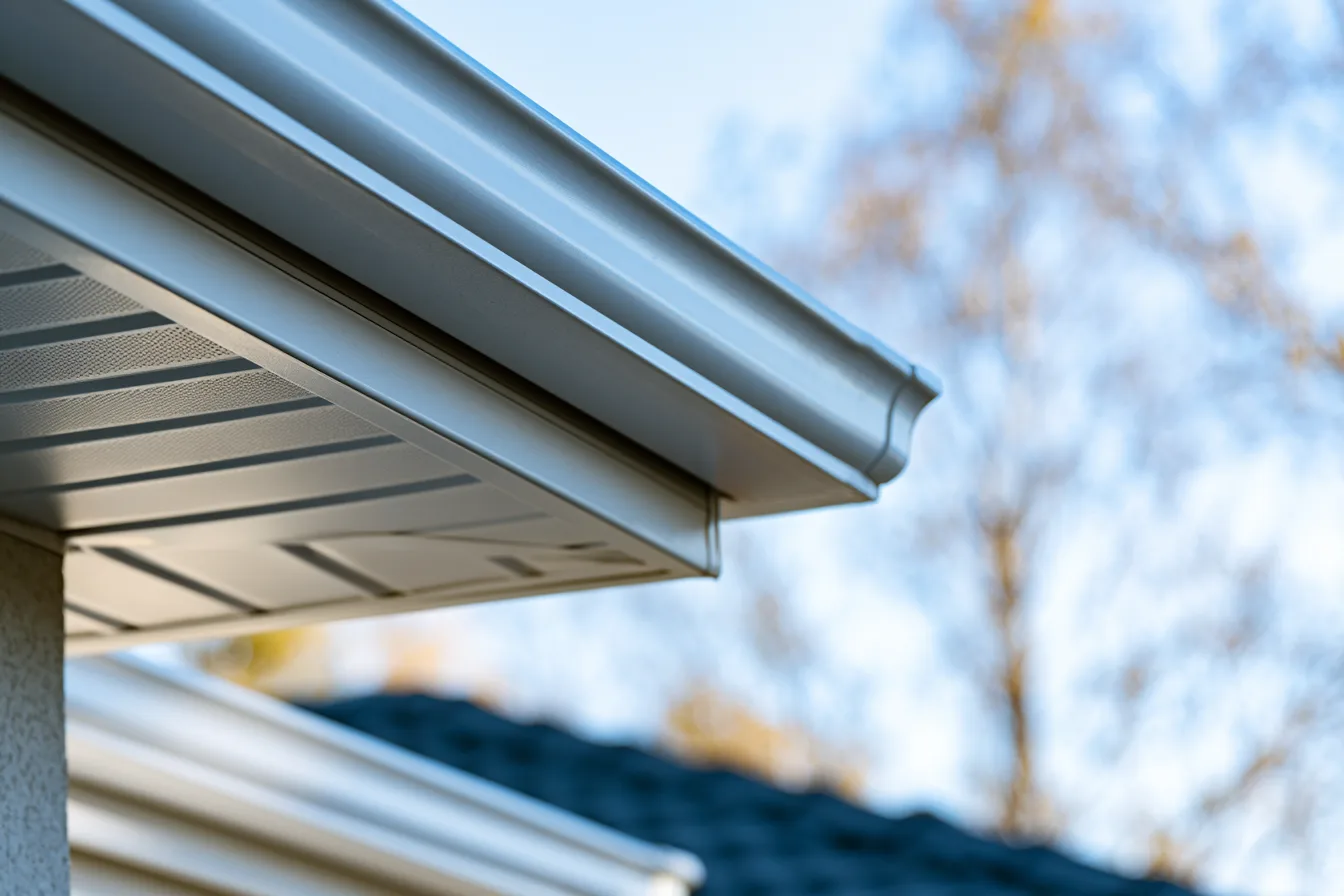
Seamless gutter and soffit at a roof corner in close view

Norman, OK

Gutter Installation and Repair in Norman, OK

In a hard rain, water going over the front lip of the gutter is one problem. A dark, soft board behind that same gutter is another one, and it's usually been happening a lot longer.

Start with what the water's doing

Start with the property and the roofing help you need.

Sizing before pricing

Gutter installation in Norman, OK is sized before it is priced

Gutter size depends on the roof draining into it as well as the length of the run. The roof area, slope, outlets and local rain exposure help the roofer choose a trough and downspout arrangement.

Area is how much water reaches the edge. Pitch is how fast it gets there, and whether it shoots straight past the trough instead of dropping into it. That's why a run that behaves itself on a low-slope ranch will overshoot on a steeper house of the same width. A roofer measures the roof draining into each run first, then sets trough size and downspout count off that number rather than off the tape around the house.

The backing matters too. A new gutter needs secure attachment to sound fascia. If water has damaged the board behind the run, soffit and fascia repair belongs in the work before new metal is hung.

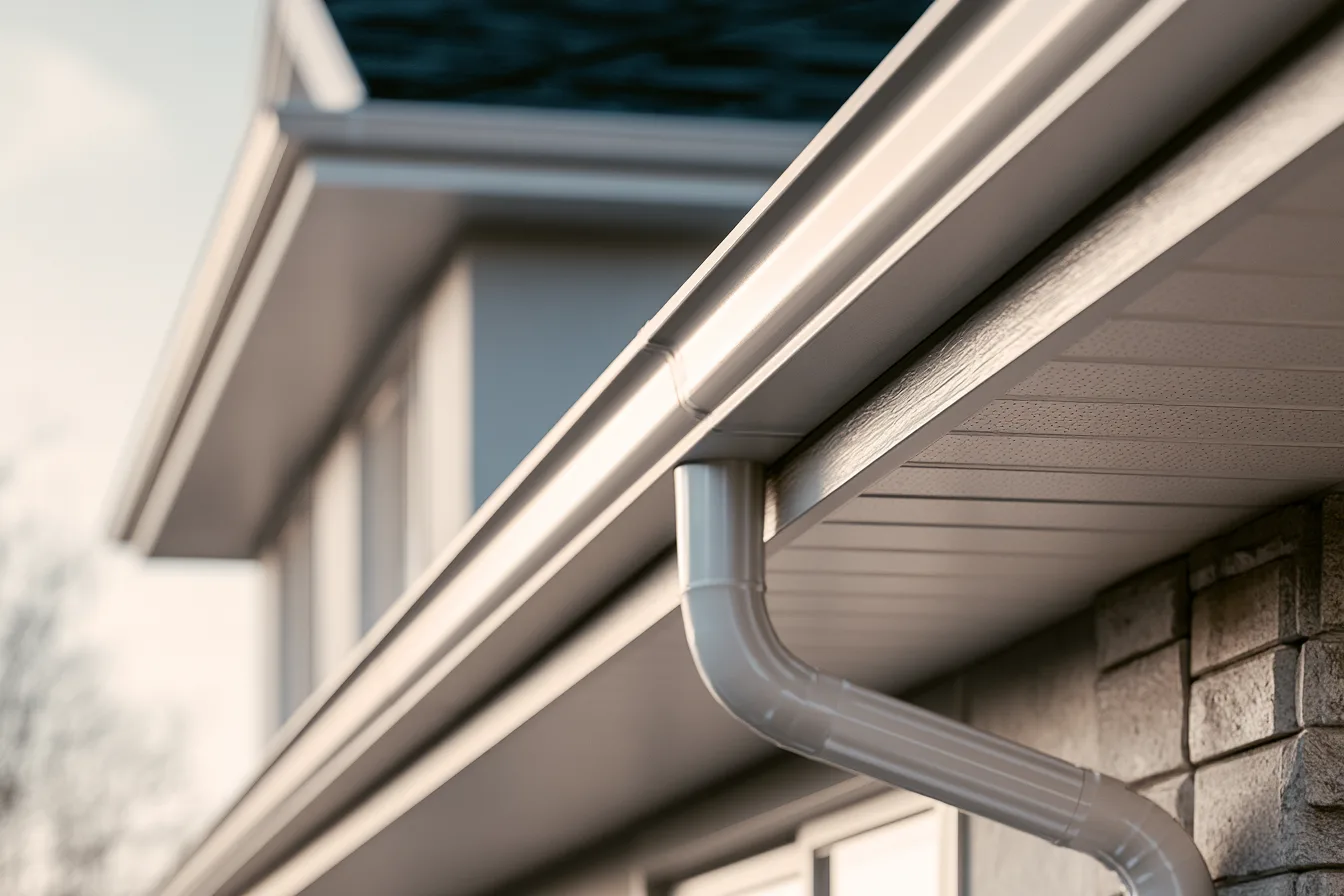
Beige gutter and downspout wrapping a stone accented corner

Two jobs, one complaint

Repair the drainage path from roof to ground

A sound run may need clearing, resealing or adjustment. A damaged run or failed backing can need replacement. The roofer checks the whole drainage path before choosing the work.

Step one

The whole run gets read, not the spot that spills

Water shows up at the low point, which is hardly ever where the fault is. The roofer follows the fall along the whole run, checks the hangers, the seams and the outlets, then gets behind the trough to look at the fascia and the drip edge. The roof feeding that run gets measured on the same trip, because that is what says whether the size was ever right in the first place.

Step two

Re-hanging and re-pitching a run that's still sound

When the metal is intact and the fault is in how it was hung, the fix is mechanical. New hangers into sound wood, the run re-pitched toward the outlet, and the seams, miters and end caps cleaned out and resealed. There's no tear-off and no new material past fasteners and sealant, and the house looks the same afterward except that the water now goes where it should.

Step three

Replacing the run, with the board sorted first

Soft fascia gets repaired or replaced before any new metal goes up, because a hanger is only as good as what it bites into. The drip edge at the roof edge gets corrected at this stage too, since that's the detail that decides whether runoff lands in the trough or behind it. The new seamless run is rolled on site and the corners are cut and sealed to fit the house.

Step four

Downspouts, discharge, and what lands on the estimate

Outlets and downspouts need to move the runoff away from the house. Ask where the water will discharge and how any new run, backing repair or underground connection is included in the estimate. Confirm any material or workmanship coverage offered.

Overflow at the corner and a stained board mean different things

Overflow, loose attachment and water behind the gutter need different repairs. Tell us what you have noticed from the ground.

  • Water sheets over the front lip in a downpour: That points at volume, slope or a blockage, and all three sit on the gutter side. A trough too small for the roof feeding it will spill on any hard rain, even the week after it's been cleaned out.

  • A seam or an end cap drips between rains: Water is sitting in the run and leaking out of a joint hours after the sky cleared. Sealant at a seam, a miter or an end cap has let go. Small, contained, and the cheapest thing on this list to put right.

  • Standing water or a mud line inside a run that looks level: Gutters get hung with deliberate fall toward the outlet. Silt lines and puddles say that fall is gone, usually because a hanger pulled or the wood behind it moved. Standing water is weight, and weight drags the run further out of pitch.

  • The fascia behind the gutter is dark, stained or soft: This is the one that changes the job. Water has been running behind the gutter instead of through it, into trim that was never built to get wet, and soft wood won't hold a hanger. New metal on rotten backing is money spent twice.

  • A gap you can see between the gutter and the house: A run pulling away from the fascia sends every rain down the back of the trough and into that gap. Loose spikes are sometimes the cause and sometimes the symptom, because a fastener only lets go once the wood it bit into has softened.

  • Trenching, splash marks or damp under a downspout: Ruts in the mulch, splatter up the siding, damp at the foundation. That's a discharge problem and not a gutter problem. The trough can be doing its job perfectly and still be dropping the water in the wrong place.

You do not need a ladder to ask for gutter work. If eave damage also affects the attic intake, roof ventilation may be part of the scope.

What moves a quote

Trough size and downspout count both move a Norman quote

A gutter quote comes off the shape of the roof and the condition of what the gutter hangs on, not off the distance around the house. Two houses with the same perimeter don't price the same when one of them sheds more water into fewer runs, or when the fascia has to be made sound before anything can be fastened to it.

Material moves it as well. Aluminum, heavier-gauge aluminum, steel and copper each carry their own line, and on aluminum the gauge matters nearly as much as the metal does. Corners are the quiet one. A straight run comes off the machine fast, and every inside miter is a joint somebody forms and seals by hand.

The roofer measures the runs, counts corners and outlets, checks the backing and identifies the access needed. Those details explain the quote more clearly than a perimeter measurement alone.

Get the gutter run measured

Trough size and downspout count: both set by how much roof drains into each run, which is why the tape goes on the roof and not just along the wall.

Corners and inside miters: each one is formed and sealed by hand instead of rolled off the machine, so a house with a lot of jogs costs more than its perimeter suggests.

Height and the state of the fascia: a second-story run needs staging, and soft board gets made good before anything hangs on it.

Guards, downspout placement, and whether gutters affect the roof

Are gutter guards worth putting on?

Guards can reduce some debris entry, but they still need upkeep and must handle the runoff reaching them. Compare the leaves or needles around your house, how the guard can be cleaned and whether its design suits the gutter. The right choice depends on that combination.

Where should the downspouts go, and where should the water end up?

Placement follows the low end of each run and the corners, with enough outlets that no single length of trough is asked to carry more than it can move. Where the water lands matters as much as where the pipe is. Discharge belongs well away from the foundation and on ground that keeps carrying it away, clear of a planting bed against the wall and clear of any lower roof section, because dropping it on a lower roof just moves the same water down a level and shortens the life of whatever sits under it. Extensions, a splash block or a buried line are all options, and your roofer can lay out which one suits the grade you've got.

Do gutters actually affect the roof itself?

They affect it at the edge, and the edge is where roofs tend to go first. Water that backs up behind a run, or spills over the back of it, soaks the fascia and works into the edge of the decking under the first course of shingles. A missing or misaligned drip edge speeds that up, because the drip edge is what decides whether runoff enters the trough or slides behind it. The middle of a roof can be in fine shape while the last few inches at the eave quietly rot out, and once the deck at the eave has gone soft you're into roof repair rather than gutter work. That's why a roofer looks at the gutter line during an inspection, and at the roof edge during a gutter job.

Can the existing gutters be re-hung instead of replaced?

It may be possible when the gutter is sound and the problem is pitch or attachment. The supporting fascia must be sound, and the gutter must be appropriately sized for its drainage area. The roofer can explain whether adjustment, related trim repair or replacement is the better scope.

The gutters are dented after a hailstorm. Do they have to be replaced?

Not always. Check whether the run still drains, remains securely attached and has sound joints. Damage that is only visual differs from a crease, split or displaced component affecting performance. Have the affected gutter and nearby roofing assessed after a storm.

Do the gutters have to come off when the roof gets torn off?

Not usually. They come off when the fascia behind them has to be replaced, or when the drip edge can't be set correctly with them in place. If yours are coming off, ask whether they're going back up or being replaced, and get that answer onto the estimate before anybody starts.
Gray two-story home with dark shingle roof at dusk

Norman Peak Roofing

Get the gutters draining properly

Tell us where water is spilling or where the run has come loose. Our roofers check the gutter, its backing and the discharge path so the repair addresses the source.

(405) 253-0996

Tell us about your roof

Roof repair, replacement, storm damage or a question about the roof.

Call (405) 253-0996Request roofing help