Step one
Your details get read first
A leak that appears only with wind-driven rain gives the roofer a different starting point from one that drips in every shower. You do not need a diagnosis before asking for help.
Norman, OK
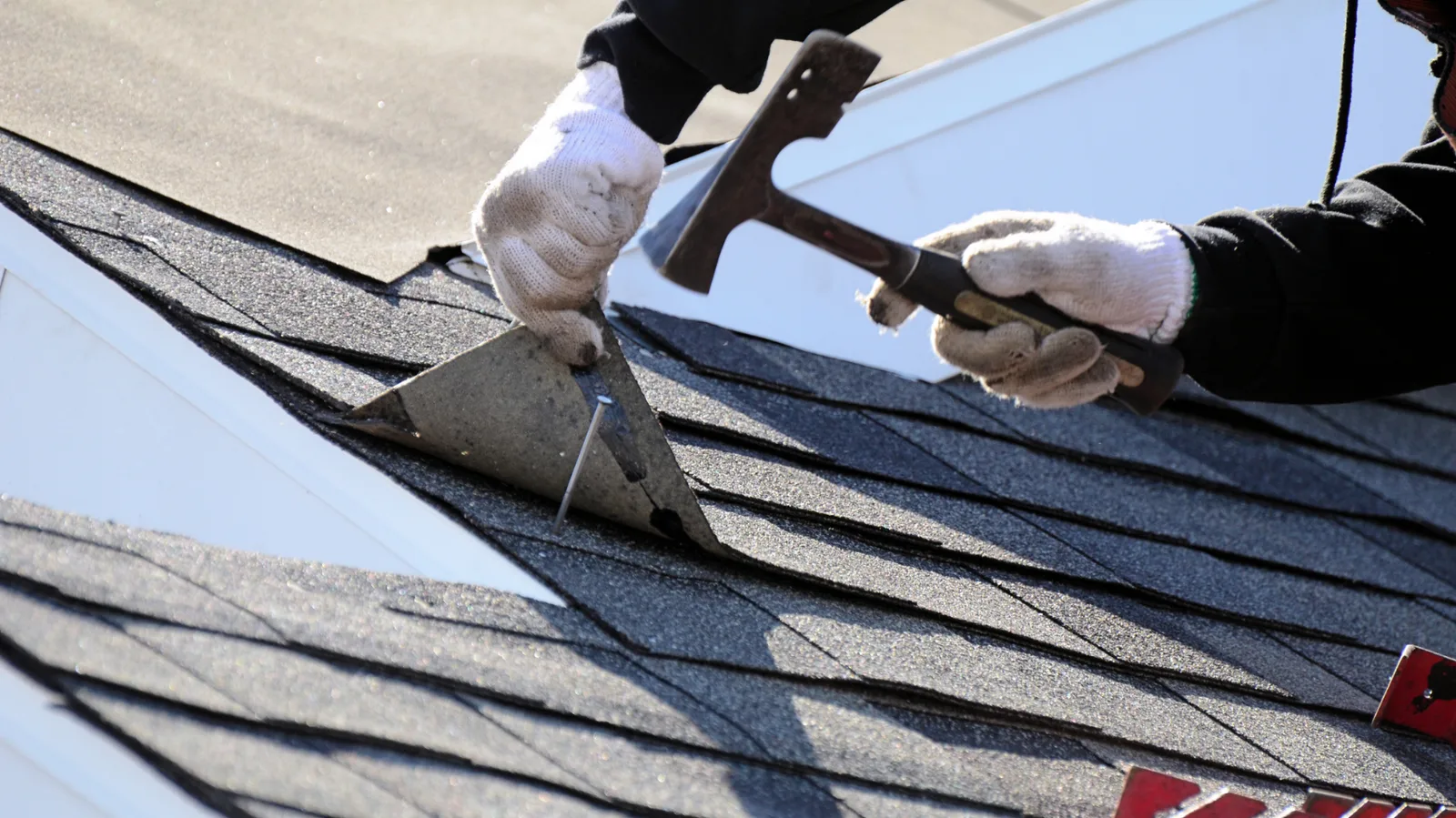
A loose shingle, a split pipe boot or a leak around the chimney can need a repair while the rest of the roof is still doing its job. Our roofers find the failed detail and check the material around it before recommending the work.
Where a repair ends
A wet bedroom ceiling does not tell you how much roofing needs replacing. Water can get past a dried-out pipe boot, lifted wall flashing or a damaged valley while the shingles farther away remain sound.
When the entry point is hidden, leak repair begins with tracing the water. When a branch has left an obvious opening, the roof still needs a check around that opening and underneath it. The visible damage is a starting point, not the full scope.
The surrounding shingles matter. A repair has to tie into material that can take the work without cracking apart. Our roofers check that condition along with the decking and explain whether a small repair is enough or a larger section needs attention.
Roof planes meet walls, pipes, chimneys and each other. Flashing and fitted collars carry water past those interruptions. A repair has to restore that path, not just cover the wet spot.
The collar around a plumbing vent can dry, split or separate from the pipe. Replacing the failed boot restores the seal at that opening; the shingles around it must also lift and tie back in without breaking.
Step flashing gets layered in piece by piece with the shingle courses wherever a roof meets a wall. When one piece lifts, gets face-nailed, or was skipped at a rebuild, water goes in behind the siding and shows up on an interior wall well below the entry.
A valley funnels the runoff from two planes into one channel. Debris, a nail driven too close to the center, or a worn metal liner turns the busiest part of the roof into the leakiest. Valley work usually means opening the courses on both sides.
Counter-flashing seats into the mortar joint and covers the base flashing underneath it. Old mortar loses its grip, the metal pulls away, and the chimney chase carries water down into the framing. Repointing is often part of that repair.
Ridge vents, turbines and box vents all break the plane at the highest point on the roof. Fasteners back out, gaskets compress, and wind-driven rain finds the gap. These usually show up as a drip that comes and goes with the weather rather than a steady one.
Missing or short drip edge lets water wick back onto the fascia and rot the deck edge. That damage shows on soffit and fascia long before it shows inside, so a slow walk around the house with a camera is worth doing.
A repair estimate should name the detail, not the roof. If the document you get back says only "repair leak" with a number after it, ask which of these six it means and what happens if the roofer finds a second one.
How a repair actually runs
Tell us the room and what you have noticed. For a roof that is not leaking but needs a condition check, start with a free roof inspection.
Step one
A leak that appears only with wind-driven rain gives the roofer a different starting point from one that drips in every shower. You do not need a diagnosis before asking for help.
Step two
Water can run along framing and decking before it reaches the ceiling. The roofer follows that path and checks the corresponding roof area. If an interior check is useful, access is discussed with you.
Step three
Boots, flashing, valleys and nearby courses get checked around the suspected entry. If opening the roof is needed to confirm the repair scope, that work is discussed before it starts.
Step four
The proposal should identify what comes off, what goes back on and how additional damaged decking will be priced. Ask what workmanship coverage is offered and whether any material warranty applies to the repair; they are separate terms.
You can tell us what you have already noticed. These clues help explain why the roofer looks beyond the stain itself.
Repeated wetting needs attention even when the ceiling dries between storms. The shape of the stain does not locate the roof opening.
Keep people out from under a bulging ceiling. Do not press or puncture it, and do not touch wet electrical fittings.
A wall-to-roof junction may be involved, but water can travel. The roofer follows the path before deciding which flashing needs work.
Tell the roofer about staining or dampness you have already seen. Roof entry, condensation and indoor air leakage are different causes; rust alone does not settle it.
Heavy granule loss can accompany shingle wear or storm damage. It is one clue to compare with the roof surface, not a replacement verdict on its own.
Wind pushes rain at angles that an ordinary shower may not reach. That helps the roofer decide which transitions to examine.
If you first noticed the problem after a storm, mention roughly when. The storm history provides local reports for context; it cannot identify the cause of one roof’s leak.
What moves the number
What a repair costs tracks how far the roofer has to open the roof to reach the failure, not how bad the ceiling looks. Two houses with the same brown ring can land in different bands: one is a dried-out boot on a walkable slope, the other is a valley on a steep plane that needs staging before anybody can work on it.
The roofer prices the opening, the material needed to restore it and the access required. If damaged decking is found beneath the repair, the agreed pricing method explains how that additional work will be handled.
When a repair would leave widespread wear or repeated failures in place, compare it with a replacement proposal. The roof replacement calculator gives a regional budget for replacing the covering. It does not estimate the price of a patch or decide which work your roof needs.
Start a repair requestSmall: one isolated detail on a walkable slope, like a pipe boot or a short run of flashing, with sound deck underneath it.
Mid: one plane opened up, valley or wall flashing rebuilt, and any soft decking cut out and replaced while the area is exposed.
Large: multiple planes, or a pitch steep enough that access and staging get priced before the repair itself even starts.
On an older Norman house, the current shingles may cover several generations of repair. The useful question is what remains sound beneath the problem area.
Individual boards need a check for sound fastening and suitable spacing. Age alone does not mean the boards need replacing.
Extra sealant or a patched flashing joint can hide how water is getting in. The repair needs to correct the detail underneath.
An addition can bring a lower pitch or a new wall junction into an otherwise straightforward roof. The materials and tie-in should suit that section.
Keep clear of a bulging ceiling, damaged structure and wet electrical equipment. If it is safe, move belongings away from the drip and catch the water in a container. Stay off the roof and take any photographs from a safe position. Contact emergency roof repair about active water entry and confirm availability. Call emergency services if anyone is in immediate danger.
A repair is useful when it corrects an isolated failure and the surrounding roof can support it. Repeated leaks, widespread brittle shingles or extensive decking damage are reasons to compare a broader repair with replacement. The roof’s condition settles the question.
When the next repair leaves another failing section beside it, compare the total work with a replacement proposal. There is no fixed number of patches that makes the decision. Ask the roofer how much sound roof would remain after the repair.
A permanent repair restores a failed detail and connects it to sound roofing. Its useful life depends on that detail, the installation and the condition around it. Temporary protection has a shorter job: keeping weather out until the permanent work can be done. The proposal should make that distinction and any workmanship term clear.
Close, rarely exact. Granule blends drift between production runs, and the shingles up there have weathered for years. On a slope you can see from the street, ask the roofer to hold the replacement bundle against the roof before it goes on, so nobody is surprised by the result from the sidewalk.

Norman Peak Roofing
Our roofers inspect the problem, explain what has failed and recommend the work that fits. The inspection is free. Tell us what you have noticed, even if the only detail you have is the room where it leaks.
(405) 253-0996