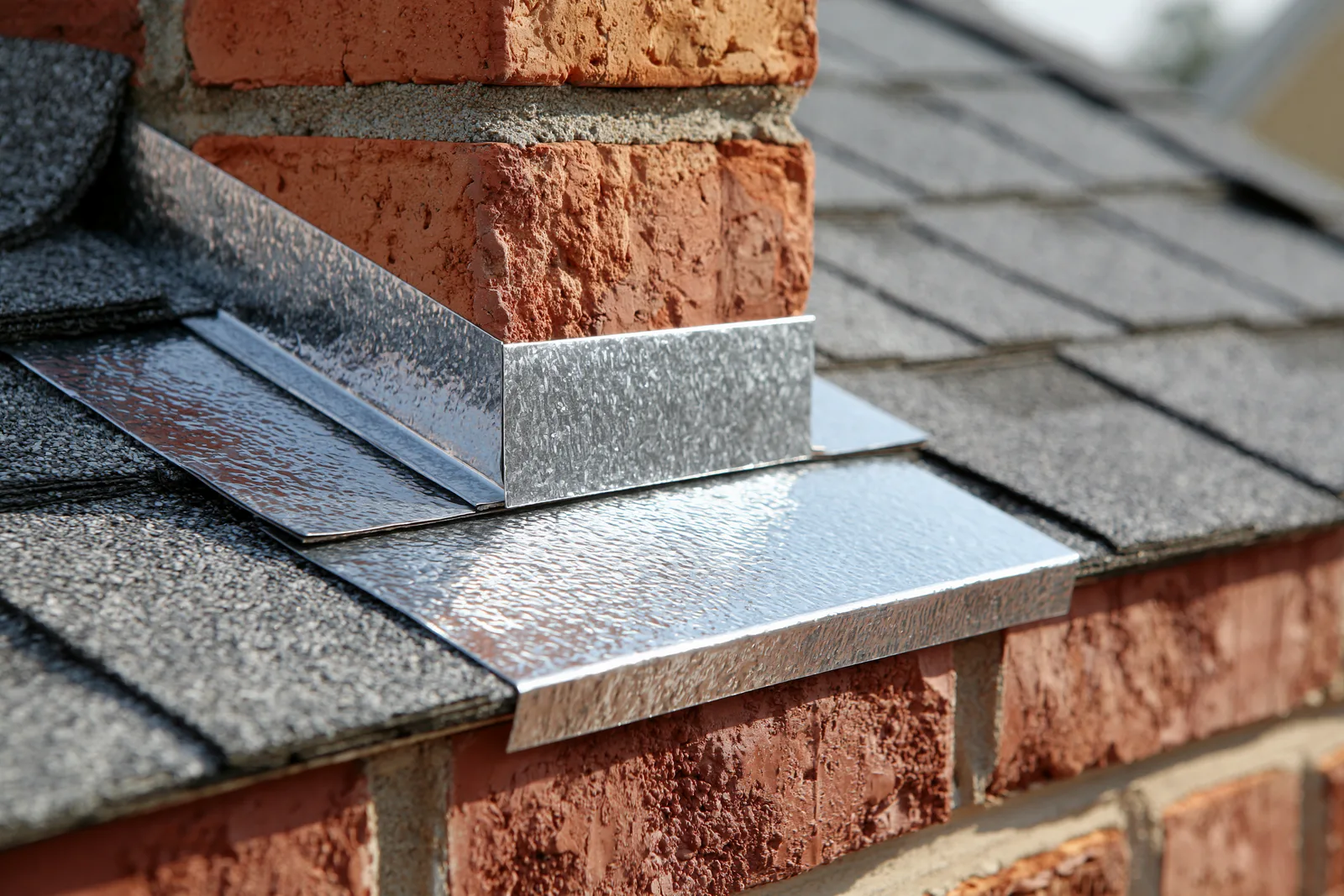
Metal saddle flashing wrapped around a brick chimney base on a shingle roof

Norman, OK

Chimney Flashing Repair in Norman, OK

A leak near the fireplace can start in the roof flashing, the masonry or another detail above it. Our roofers trace the source and explain which repair is needed.

Tell Norman Peak Roofing what you're seeing

Start with the property and the roofing help you need.

Roofer or mason

Find out whether the leak starts in the flashing

Water near a chimney raises a useful question: is the problem in the roofing or in the chimney itself? A ceiling stain cannot settle that from below.

Flashing directs water away from the joint between the roof and chimney. Cracked masonry or a damaged crown can admit water above that joint. Our roofers inspect the roof connections and explain when a mason or chimney specialist also needs to be involved.

Metal saddle flashing wrapped around a brick chimney base on a shingle roof

Base flashing, step flashing, counterflashing and a cricket if needed

Apron, step and counterflashing work together with the roof covering. An uphill cricket may also be needed to divert water around the chimney. The repair depends on which detail has failed and the condition beneath it.

Base or apron flashing, downhill face

The downhill apron laps over the roofing below and sheds water back onto the roof surface. Its attachment, laps and condition need checking along with the side flashing.

Step flashing up both sides

The sides take individual L-shaped pieces, one per shingle course, each lapped over the piece below it like scales. Step flashing can't go in as one long strip, so a proper repair lifts your shingles instead of working over the top of them.

Counterflashing set into the brick

Above the step flashing sits a second layer, tucked into a groove cut in the mortar joint and folded down over the metal beneath, so water can't run behind the vertical legs. Counterflashing stuck to the face of the brick with sealant alone is a common shortcut, and it's a common source of the leak you're chasing.

A cricket on the uphill side

A cricket is a small peaked structure on the uphill side that divides water flow around the chimney. The chimney width, roof arrangement and applicable code determine whether one is required.

Underlayment and the shingle tie-in

Metal alone isn't the seal: the underlayment has to run up the brick and lap correctly with each flashing piece, and your shingles have to close over the horizontal legs. Our roofers rebuild that layering in order, because patching the one visible piece leaves the sequence wrong and the leak alive.

Where the metal stops

The crown, masonry and other chimney components need assessment by the appropriate specialist where damage is suspected. New roof flashing will not correct water entering through an unrelated masonry defect.

A roof inspection can help separate roof-detail problems from work that needs a chimney specialist. Confirm the inspection scope when booking.

Repair the failed detail beneath the patch

Sealant has legitimate uses in specified joints. A heavy patch over failed flashing is different: it may hide a detail that needs to be rebuilt. The roofer should explain what the proposed repair addresses.

Step one

Protect what's under the drip

Move what's sitting under the stain, put a container down, and take photographs of your ceiling before anything dries out. Nobody should be on a wet roof to look, and a tarp on a chimney is work for somebody in a harness. Photographs from the floor are what's useful before a roofer is on site, and the date on them matters to you later.

Step two

Trace it back to the entry point

Where you see it inside is rarely where it came in. A roofer works the attic side where there's access, checking the framing above the stain, then works the chimney itself: the apron, each step piece, the counterflashing groove, and the uphill side where debris collects. An open crown or a failed mortar joint is masonry, and you'll hear that called out right then.

Step three

Distinguish a joint repair from a cover-up

If sound metal has an open sealant joint, cleaning and resealing with the appropriate product may be reasonable. Corroded metal, incorrect laps or loose attachment need their own repair. A surface smear cannot recreate missing flashing.

Step four

Put the metal back in sequence

Where flashing needs replacement, surrounding shingles are carefully lifted and the underlayment and metal are integrated in the required sequence. Confirm the scope, concealed-damage allowance and any workmanship coverage before the work begins.

What moves the number

Reseals and full rebuilds sit at two different Norman prices

Three different jobs hide behind the words chimney flashing, and they don't sit anywhere near each other on price. Working out which one you're looking at is most of what you want out of the first visit.

A reseal is the smallest: the metal's sound, one joint has opened, and it gets cleaned and closed. A step-flashing replacement is the middle, shingles up one or both sides and new metal in course by course, so your price follows how many courses come apart and whether brittle shingles break coming off. A full rebuild is the largest, with cricket framing behind the stack, deck cut and re-covered, and new metal from the apron to the counterflashing.

What pushes a job up a band shows up after the shingles come up. Take the figure home when you get it: sit with it as long as you want, hold it against another roofer's number, and decide on your own clock.

Get the flashing work quoted

How much of your roof has to come apart to reach the failure, and no ceiling photograph shows that

What turns up under your shingles: sound decking, or wood that has been wet long enough to need replacing

Whether your stack needs a cricket framed behind it, which turns a metal job into framing and decking work

Crickets, crowns, and why the leak shows up indoors

Chimney leaks raise a question no other part of a roof does: whether the fault's even roofing. The crown, the brick and the mortar joints belong to a mason, and your ceiling stain looks the same either way.

What is a chimney cricket, and does my chimney need one?

A cricket is a raised, sloped structure behind the chimney that sends water around its sides. The chimney width, roof position and applicable code determine whether one is needed. Repeated uphill leaks call for checking the drainage detail as well as the metal.

Is the chimney crown part of a roofing repair?

The crown and brickwork usually need a mason or chimney specialist. If both the masonry and flashing need repair, coordinate the sequence and responsibilities. A flashing-only repair will not solve water entering through a cracked crown.

Why is the stain nowhere near the chimney?

Water follows the framing. Coming in at the chimney, it runs along the top of a rafter or down the sheathing until something stops it, which can be several feet away and on the far side of a wall. A bedroom ceiling stain, a damp patch at the top of your stairwell, or a line of paint lifting along a beam can each trace back to the same chimney, which is why chasing the stain instead of the entry point is how you pay for the same leak repair twice.

Is a leak at the chimney always the flashing?

No. Water can enter through damaged flashing, masonry, the crown or a nearby roof detail. The inspection needs to distinguish those possibilities before work is priced.

Can a roofer just seal it and be done?

Sometimes, when the problem is a failed sealant joint and the underlying metal and laps are sound. Sealant over rusted, missing or incorrectly installed flashing is not an equivalent repair. Ask which condition the roofer found.
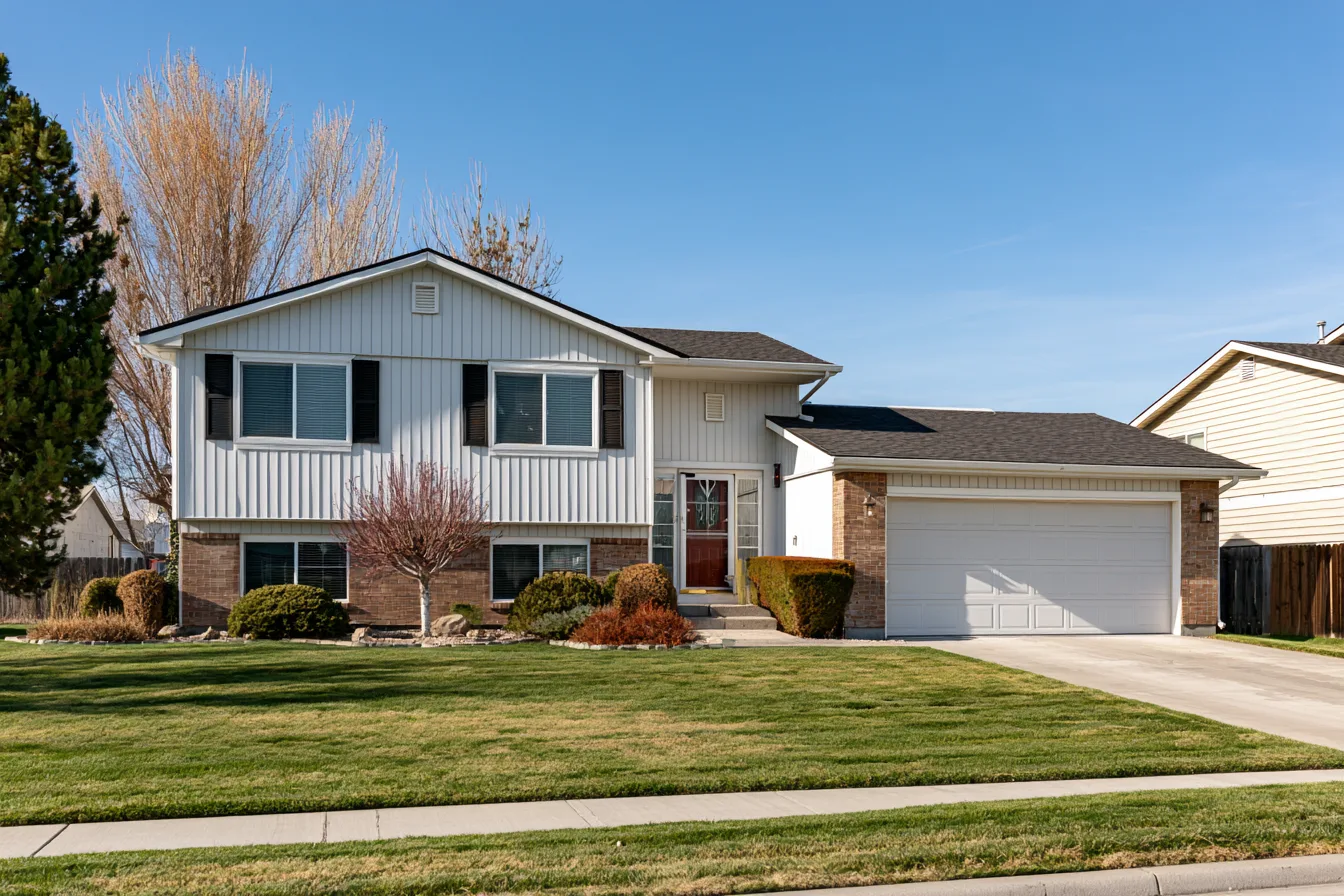
A split-level home with light siding and a brick lower level under a dark shingle roof

Norman Peak Roofing

Get the chimney leak traced

Tell us where the stain appears and when the leak occurs. Our roofers can assess the flashing and surrounding roof, explain the repair options and flag any chimney work that needs a separate specialist.

(405) 253-0996

Chimney and flashing requests

Roof repair, replacement, storm damage or a question about the roof.

Call (405) 253-0996Request roofing help