You get in touch
You say where the water shows up
Which room the ceiling's stained in, whether the glass has fogged, and whether it only leaks in driven rain are the three details worth sending. They decide what the roofer brings up the ladder.
Norman, OK
Water at a skylight can come from flashing, the unit, nearby roofing or condensation. Our roofers trace the cause before recommending a repair or replacement.
Where the water gets in
A brown ring on the light shaft does not identify the part that failed. Water can enter around the flashing, through a damaged unit or elsewhere on the roof and travel to the opening.
The condition of the glazing, curb, flashing and surrounding covering determines the repair. Our roofers inspect those details and explain what needs attention, including work that may require a skylight specialist or an interior trade.
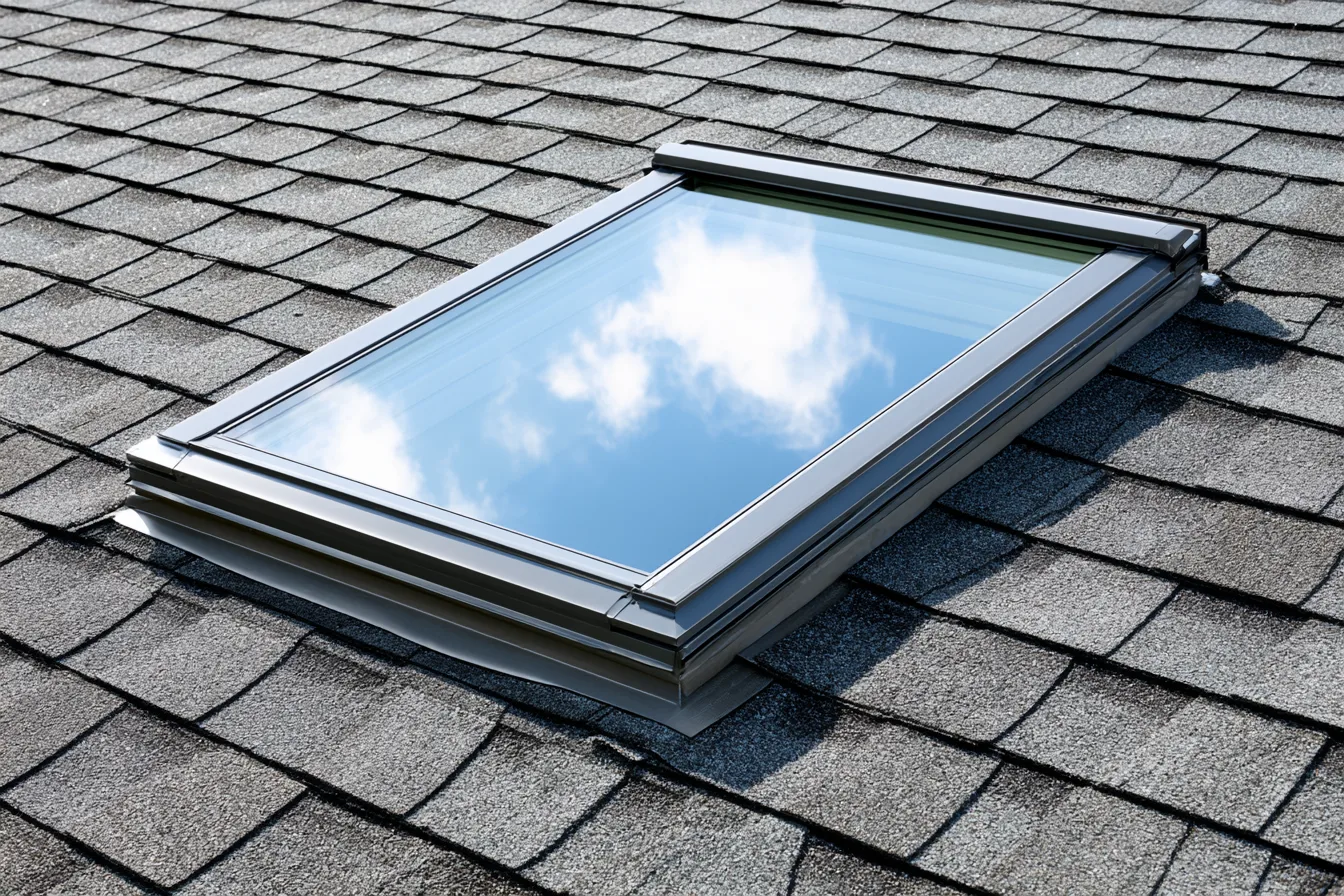
A skylight repair can involve only one component or several. The estimate should identify what can remain and what needs replacement.
The raised frame the unit sits on, either built up from lumber on the deck or formed into the skylight itself. Curbs rot from the top down while the metal above them fails quietly, so your roofer rebuilds a soft curb before a new unit goes anywhere near it.
Step pieces up the sides, an apron at the bottom, a saddle at the head, each one shedding water to the piece below it. When the metal's corroded or the steps have lifted, our roofers set a new kit instead of caulking the old one, which is the same detail work a chimney flashing job comes down to.
The glass or acrylic, frame, seals and operating hardware have their own repair options. Replacement parts depend on the model and availability; a failed component does not automatically mean replacing the entire opening.
The hole cut through the sheathing and the headers framing it. A leak that ran for a couple of seasons softens the corners first, and spongy decking comes out so new sheathing can go in. That's the part of a skylight job most likely to grow once the roof's open.
Shingles and underlayment for a few courses on each side of the unit. A skylight's only as dry as the field it sits in, so those courses come off and go back on properly instead of being cut around.
Drywall, trim and paint inside the light well may need repair after the water source is corrected. Confirm whether interior work is included or needs a separate trade.
If the ceiling stain's the only thing you can point at, start with roof leak repair and let the tracing settle whether the skylight's the source or just the place the water arrived.
How the visit goes
An inspection considers the unit, its roof connections and the pattern of moisture inside. The stain helps guide the investigation, but it does not prove where water entered.
You get in touch
Which room the ceiling's stained in, whether the glass has fogged, and whether it only leaks in driven rain are the three details worth sending. They decide what the roofer brings up the ladder.
On the roof
Our roofers check the visible components and surrounding roof. Access, weather and concealed conditions determine whether further investigation is needed.
What came back
Ask the roofer to identify the failed detail, the proposed repair and any uncertainty around concealed framing. Confirm whether photographs or a written report are included if you need them.
Your call
You book the work when you decide to, and no sooner. Sit with the scope and the figure as long as you want, and compare it against anything else you've been handed.
Three different things get called a leaking skylight, and only one of them is water coming through the roof. A failed seal inside the glass, condensation on the room side and water entry each leave a different mark.
Persistent fog inside an insulated glass unit can indicate a failed seal. A glazing or unit replacement may be needed, depending on available parts.
Condensation can form when indoor moisture meets a cold surface. Humidity, insulation and air leakage need consideration.
The roofer needs to trace the water path around the unit and the surrounding roof.
Note the weather and location. Flashing, seals and nearby roof details all need checking.
Cracks, displaced components or damaged flashing deserve inspection. Visible dents alone do not establish a leak.
Previous repairs can conceal an unresolved detail. The condition underneath determines whether the flashing can be repaired or renewed.
Move belongings out of a leak’s path and photograph visible staining from inside. Avoid climbing onto a wet roof. Condensation needs a moisture assessment; adding roof vents alone may not solve it.
What moves the number
Most people asking about a skylight are bracing for the worst number, because the ceiling looks bad and the roof's out of reach. Three different jobs sit behind that stain, and they aren't close to each other in price.
Reflashing keeps the unit and renews the metal tying it into the shingles, plus the courses that come off to reach it. Replacing the glazing swaps the glass or the dome when the seal's gone or the hardware is finished, and it needs a sound curb and kit underneath it. Rebuilding the curb and the deck opening is the big one, and it follows water that sat in the framing long enough to soften it.
Mounting changes the work. A curb-mounted skylight sits on a raised frame; a deck-mounted model attaches at the roof deck with its specified flashing system. The roofer needs the model, opening and roof details before ordering a replacement.
Reflashing is the short visit of the three. A curb and deck rebuild is the long one, and how long depends on what the sheathing looks like once it's open. When reflashing turns out to be the answer, that's the answer you get, and the estimate stops there.
Get the skylight pricedHow much covering has to come off around the opening to reach the flashing and put it back correctly.
Whether the curb and the decking are still sound once they're uncovered.
Whether the unit is curb-mount or deck-mount, and whether a like-for-like replacement is still made.
When nearby shingles are being removed, the flashing and opening are easier to reach. Compare the condition and repair options for the unit with the roofing work already planned.
A serviceable skylight may be retained with the correct flashing work.
The model, roof slope and covering determine which flashing system is appropriate.
If the opening is wet or deteriorated, the repair needs to address the affected substrate as well as the visible unit.
Fog behind the glass, a leak that only turned up after a storm, and the age of the covering around the unit are the three that come up most. They don't point in the same direction.
Fog between the panes can indicate an insulated-glass seal problem. It does not establish whether the roof is also leaking. The manufacturer or service specialist can determine whether a replacement glazing unit is available; have the roof connections checked if water is entering indoors.
Age of the unit against age of the covering is the comparison that decides it. Putting a new skylight into a roof that's a few years from replacement means paying to open that section twice, because the flashing has to come apart again when the shingles go. Where the covering is near the end and the unit is failing, doing both in one go is usually the cheaper path. Where the roof is young and only the unit is tired, replacing the unit on its own is reasonable, and our roofer gives you the age and condition of both so the comparison is yours to make.
Storm-timed leaks often start above the skylight and only arrive at it. Wind lifts step flashing, hail dishes the metal or splits an acrylic dome, and shingles displaced upslope send water in under the head piece. Because it travels down the shaft, the stain lands at the skylight either way, so roof leak repair starts on the slope above the unit.
Compare component availability, the condition of the unit and curb, and the work needed to renew the flashing. A damaged or obsolete unit can favor replacement. An otherwise serviceable unit with a repairable roof connection may be worth keeping.
A roofer can address the flashing and surrounding covering. Glazing, operating hardware and interior finishes may require additional scope or another specialist. Confirm responsibility for each part before approving the work.

Norman Peak Roofing
Tell us where moisture appears, whether it follows rain and whether the glass itself is fogged or damaged. Our roofers can inspect the unit and surrounding roof and explain the next step.
(405) 253-0996