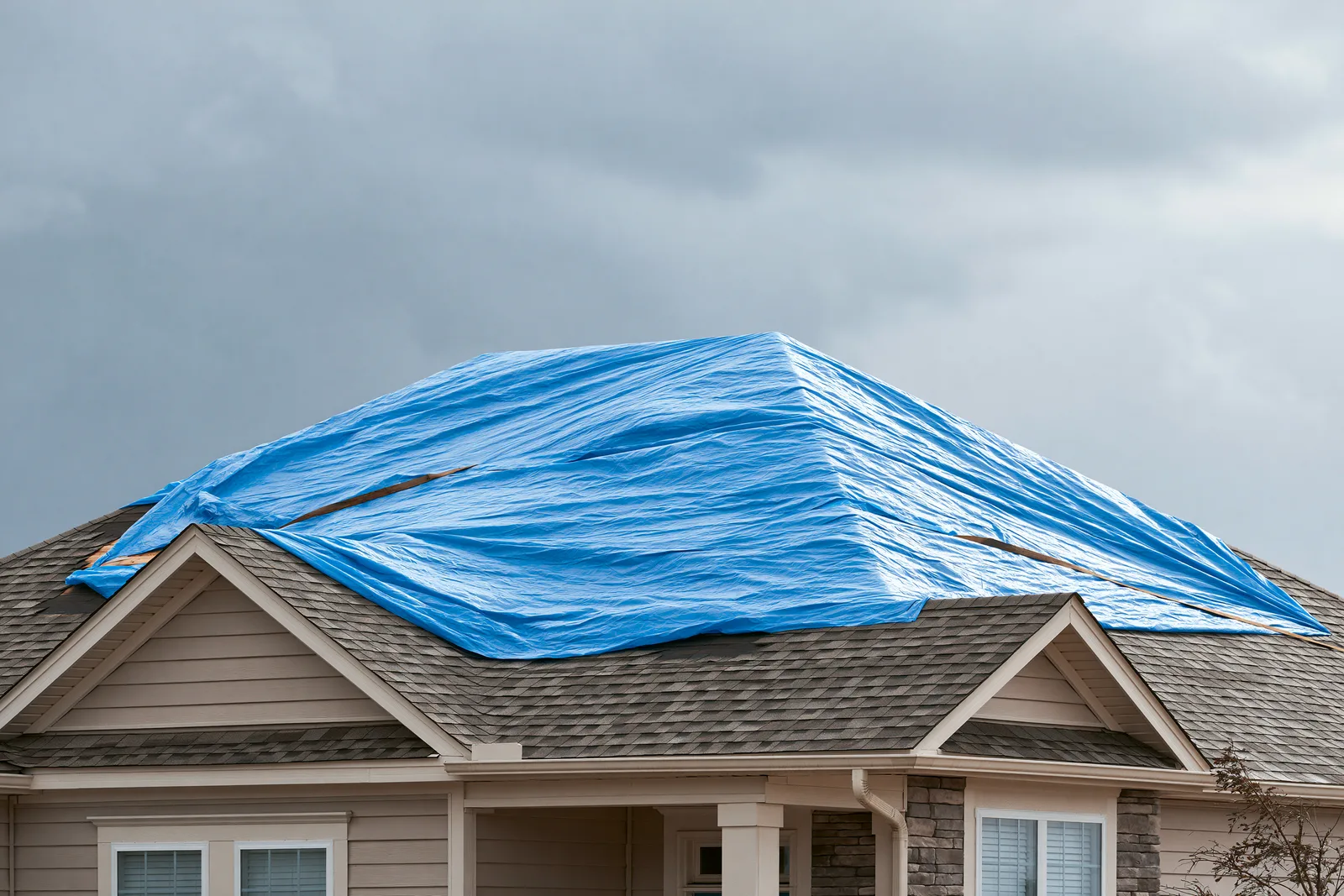
The storm hit overnight and water is coming through the ceiling. What can I do at ground level?
If it is safe, move belongings away from the leak and place a container beneath a small drip. Keep away from sagging ceilings, damaged structure and wet electrical equipment. Take photographs from a safe position. Call for roofing help and describe the active water entry; confirm availability directly.
Should I put a tarp on it myself?
Leave roof access and temporary covering to a qualified professional. Wet surfaces, wind, openings and power lines can make the work dangerous. Describe what you can see from a safe place instead of climbing up.
My ceiling is bulging. Is that different from a drip?
Yes. Keep people and pets out of the affected area because wet ceiling material can collapse. Avoid wet electrical equipment, and do not approach a panel through water. Seek qualified help; call emergency services if anyone is in immediate danger.
When do I contact my insurance company?
Early, and your own policy is the authority on the deadline instead of this page. Policies generally ask the policyholder to report damage and to take reasonable measures to prevent further damage, which is what temporary covering is. Photograph the damage before anything is moved or cleaned, ask the roofer to keep the emergency protection invoice separate from the repair estimate, and ask your carrier directly whether the temporary work is covered. The rest of it, meaning the adjuster visit, the scope argument, and what a carrier will and won't pay for, sits with roof insurance claims.
What happens after the roof is covered?
The roof still needs a permanent-repair assessment, and wet interior materials may need restoration work. Confirm who will check the protection and arrange follow-up. If water continues entering, report it rather than assuming the tarp has solved the leak. See roof leak repair for the investigation that follows.